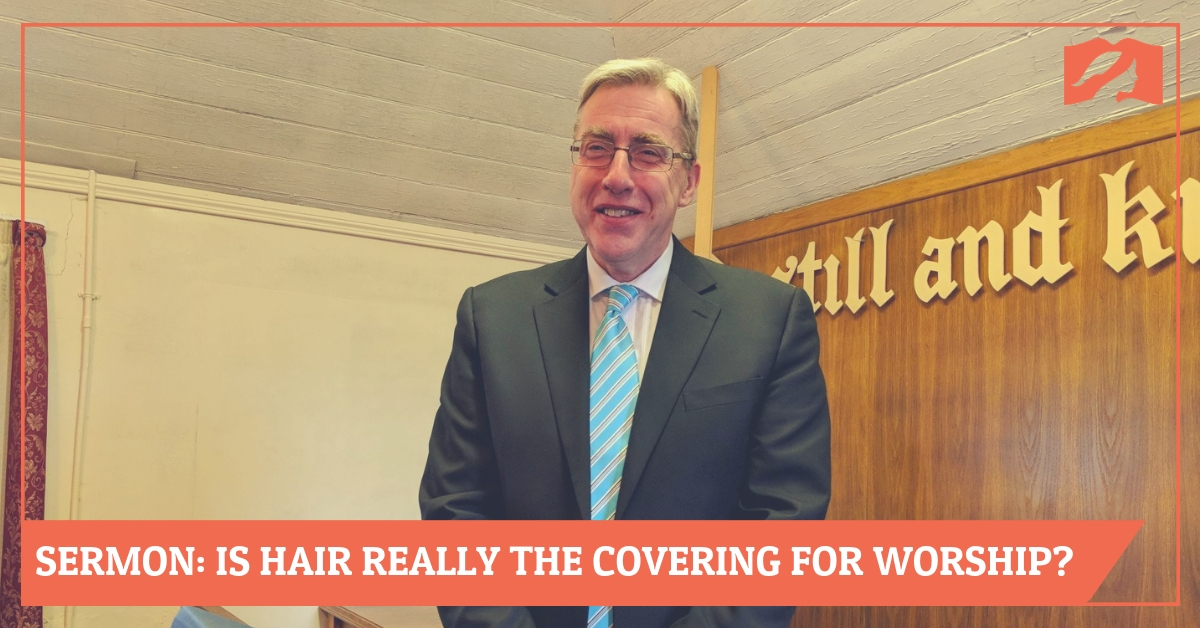
Nikolaos Seferiadis is the pastor of Trinity International Baptist Church in Athens, Greece. He is married to Stavroula and they have two daughters.
SERMON COORDINATOR NOTES: This sermon provides a concise exegetical approach to the passage looking at the flow of the argument, the Greek used in the text, and addressing the arguments against covering.
>> In addition to streaming this sermon or watching it above, you can also download it.
Heard a good sermon on head covering or biblical manhood/womanhood? Tell us about it here.
SERMON COORDINATOR NOTES: This sermon addresses the shift in the mindset of the culture pertaining to the roles of men and women, as well as a historical and linguistic argument for the practice of a physical covering.
>> In addition to streaming this sermon or watching it above, you can also download it.
Heard a good sermon on head covering or biblical manhood/womanhood? Tell us about it here.
Preacher: Rev. Timothy Nelson | Sermon Length: 47 min 2 sec | Preached: February 19, 2018
Timothy Nelson has been the Minister of Ballynahinch Free Presbyterian Church since January 2016 having accept the Lord’s call to move from Sixmilecross Free Presbyterian Church where he had been the Minister since 2005. He has lectured in the Whitefield College since 1998, first in New Testament Greek, and, since 2012, in Biblical Exegesis. In January 2018, he was appointed Principal of the College.
SERMON COORDINATOR NOTES: This is a very concise look at 1 Corinthians 11 placing a greater emphasis on what the covering is. This is a good introductory sermon to the topic that gives the main overview of the position and leaves the listener equipped to hear a more detailed exegesis of the text.
>> In addition to streaming this sermon or watching it above, you can also download it.
Heard a good sermon on head covering or biblical manhood/womanhood? Tell us about it here.
The Objection: You say that Paul appeals to the creation order in 1 Corinthians 11 and I agree that it appears that way. The thing is, if that is the case, where was Eve’s head covering? Genesis 2 says she was naked, and not ashamed. And you can’t turn around and say that it only began after the Fall, because then it wouldn’t be a Creation mandate. How would you respond to such an argument?
In 1 Corinthians 11, the Apostle Paul grounds his argument for head covering in the pre-fall creation order. This is one of the strongest arguments for why veiling is not a cultural practice but rather is something that is to be upheld by all Christians. In making a distinction between the principle (biblical manhood and womanhood) and the symbol (head covering), some hold that only the principle needs modern affirmation. The symbol is seen as a cultural practice that pointed to proper gender roles in the first century, but that has no meaning today. Many complementarian theologians arrive at this conclusion because of a wrong expectation of continuity in practice. Meaning if the veil was truly grounded in the creation order, then not only would Eve have worn it before the fall, but also every godly woman throughout biblical history.
Head covering is not a practice that was required under the Old Covenant (though many women did cover throughout this time). It is only a requirement for those under the New Covenant (like us). So let’s first state up front that I agree that head covering was not supposed to be practiced in continuity from Eve onward. But that does not deal a death blow to the creation order argument. My position is that God has taken something common (a covering) and has infused it with creation order meaning. So he has set up a brand new symbol which he designed and gave meaning to, and then had His apostles deliver it to the churches for them to practice. This is not an anomaly as God has always been about creating symbols to visually teach different truths. Many of these symbols (like head covering) were only to be practiced under one covenant. For example, the sacrifices and the feasts (Col 2:16-17) were only to be practiced under the Old Covenant whereas Baptism and the Lord’s Supper are only for the new covenant. Read more
In this video Elizabeth McGee shares about the joy of having a clear conscience. In it she shares an example about bathing suits to help you see that there’s freedom in following the Lord’s commands (in headcovering and everything else).
[Series introduction:This post is part of a series that will examine what certain leaders in church history believed about head covering. Their arguments, choice of language and conclusions should not be misconstrued as an endorsement from us. The purpose of this series is to faithfully show what they believe about covering rather than only selectively quoting the parts we agree with.]
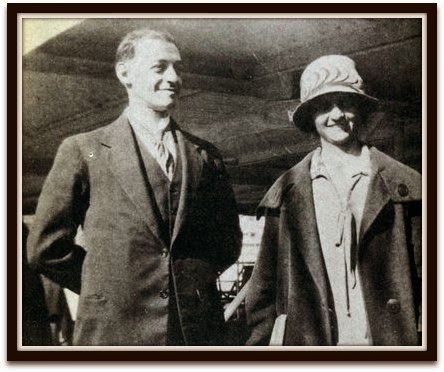
A.W. Pink (1886–1952), according to his biographer Iain Murray, is “one of the most influential evangelical authors in the second half of the twentieth century.” He pastored churches in the United States and Australia but he is best known for his books such as “The Attributes of God” and “The Sovereignty of God“.
In May 1926, Arthur Pink addressed the congregation of Particular Baptist Church in Sydney, Australia. His topic was “Headship” and the sermon text was 1 Corinthians 11:2-16. Through this sermon we come to understand what Pink believed about the symbol of head covering.
He believed that the symbol should be practiced today and distanced himself from the cultural view. He said that “there are some who claim that much in this first epistle to the Corinthians only had to do with local conditions that then existed and does not apply to the churches of God today. I emphatically deny it.” He also didn’t see this as an insignificant matter. He knew that “there is nothing small or trivial in the things of God” and that “big doors swing on little hinges.” That’s why he exhorted his congregation on this passage. Through his words we see that head covering in Australia was losing popularity even in the 1920’s. He said that wearing one may “cause the world to sneer” and “bring upon you the taunt of ‘old-fashioned'”. He also mentioned that there was “fashion which is increasingly popular among women today” of cutting their hair short, which he was strictly against. This was the era of the first wave of feminism and we see that it was already having a negative impact on biblical gender roles and distinctions. Read more
The following article is a part of our re-blog series where we seek to give exposure to those who are writing interesting pieces on Complementarianism and head covering. We are not the author.
When I first told my husband I wanted to use a head-covering, and explained that the Bible tells women to do so as a sign of submission, he gave me a frown. Submission? The word was distasteful to him. It made him think of a brainless dish rag subjugating herself to every whim of her tyrant master. But, that’s not what he was! So, why submission? After we realized that the Bible uses the word submission to mean that the wife respects her husband’s leadership, we were back on familiar ground.
Similar to how my husband respects and “submits” to the authority of his boss at work, God expects me to respect and submit to the authority of my husband. It doesn’t mean he’s better than me; it means his role and my role are different. He has been given by God the responsibility of leading his family. I have been given by God the responsibility of respecting his opinions and “following through with his orders.” I don’t think submission is so hard to understand when put in those terms.
It’s fairly easy to follow through with orders when what your boss asks of you is something you also agree with. But what about when your boss asks you to do something you don’t agree with? What then? If my husband “disobeys” his boss at work, he could get fired! In the work realm, disrespecting your boss’s orders can get you into big trouble. In much the same way, when a wife disrespects her “boss’s” orders (or wishes), trouble is just around the corner. Marital problems develop. Finger pointing and blaming worsen the situation. Things might get uglier than that; things could end in divorce! That’s not a biblical solution, of course. But, if we don’t want that to happen to us, if we don’t want problems in our marriage, we need to think about how toprevent them before the situation gets serious. There’s got to be a better way of dealing with disagreement.
So, I’m going to throw out a few examples of how one might deal with differences of opinion in a marriage. Of course, these are my own opinions, and even though I will sometimes use quotations from the Bible to support what I believe to be the best solution, you are responsible for reading the Bible for yourself, and obeying God according to your best interpretation. Just watch out for those sneaky preconceived notions that can sometimes get in the way! In this post, I’m going to address head-covering. In subsequent posts, I will tackle other issues.