fbpx

Navigate / search

The Biology of Hair Lengths: Why it’s Natural for Women to Have Longer Hair
The Biology of Hair Lengths: Why it’s Natural for Women to Have Longer Hair
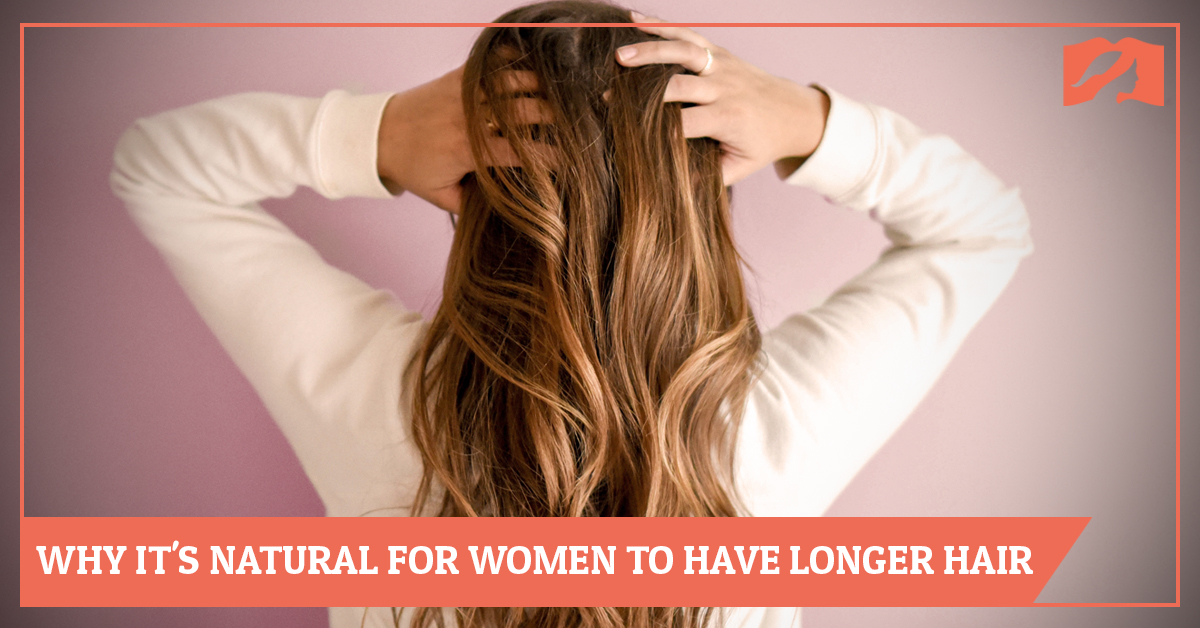
In 1 Cor 11:14-15, Paul declares that “nature” teaches us that men are to have short hair and women are to have long hair. Is there a biological function that makes women have longer hair?

Yes, there does seem to be a built-in biological process that causes women to have longer hair than men (generally speaking, of course). This process is due to our hormones. First, I need to explain how our hair grows. Men and women’s hair grow at pretty much the same rate of about 1cm per month. So the difference is not that women’s hair grows faster. 1) Castro, J. (2014). How Fast Does Hair Grow?. [online] Live Science. Available at: https://www.livescience.com/42868-how-fast-does-hair-grow.html [Accessed 12 Feb. 2018].

Our hair grows and sheds in a three-stage process which keeps repeating itself. So we keep cycling through the phases and each of the hairs on our head are in a different phase at any given time (with about 90% being in the growing phase). 2) Geggel, L. (2017). Hair Loss and Balding: Causes, Symptoms & Treatments. [online] Live Science. Available at: https://www.livescience.com/34731-hair-loss-alopecia-treatment.html [Accessed 12 Feb. 2018]. However, our hormones are a major factor which can determine how long we stay in a particular phase.

These three phases are:

Anagen – Hair growth phase (lasts 2-7 years)
Catagen – Transition phase (lasts about 10 days)
Telogen – Resting or shedding phase (lasts about 3 months)

I recommend you watch this short video to help you visualize and understand these three phases better:

As mentioned our hormones play a significant role in how long we stay in a particular phase. Obviously if one stays in the anagen (hair growth phase) for a longer time, they will have longer hair. And this is exactly the case: women tend to stay in this phase longer than men.

Pastor John MacArthur explains,

“Men and women have distinctive physiologies. One obvious difference is the process of hair growth. Head hair develops in three stages: formation and growth, resting, and fallout. The male hormone testosterone speeds up the cycle so that men reach the third stage earlier than women. The female hormone estrogen causes the cycle to remain in stage one for a longer period, causing women’s hair to grow longer than men’s.” 3) MacArthur, John (2011). Divine design. Colorado Springs: David C. Cook, p.49.

Now that is a theologian’s perspective, but is that backed up scientifically? Since dermatology is not a field I’m an expert in, I had to do some digging and I found out that MacArthur is absolutely correct in his assessment.

Here’s what some authorities specializing in hair biology say:

“The cause of pattern thinning in men is primarily related to two sex hormones, testosterone and DHT. The body converts testosterone into the hormone DHT by way of an enzyme found in various tissues throughout the body…In men…DHT increases the resting (telogen) phase and decreases the growing (anagen) phase of hair.” 4) Rassman, W. and Bernstein, R. (2009). Hair loss & replacement for dummies. Hoboken, NJ: John Wiley & Sons, p.61.

“DHT affects hair follicles and seems to prolong the telogen (resting) phase.” 5) Sherrow, V. (2006). Encyclopedia of hair. Westport, Conn. [u.a.]: Greenwood Press, p.173.

“In women, hair loss or noticeable thinning of the hair often occurs when levels of the female hormone estrogen decline after menopause. Prior to that time estrogen helps to counteract testosterone, which can be converted into the hormone DHT, which can cause hair follicles to…enter the resting stage of the hair growth cycle earlier than normal.” 6) Sherrow, V. (2006). Encyclopedia of hair. Westport, Conn. [u.a.]: Greenwood Press, p.173.

“There is some limited trichogram data to suggest that estrogens decrease the resting phase and prolong the growing phase of the hair cycle, hence estrogens are used in the treatment of female pattern hair loss in some countries.” 7) Thornton, J. and Stevenson, S. (2007). Effect of estrogens on skin aging and the potential role of SERMs. Clinical Interventions in Aging, Volume 2, pp.283-297.

In these sources, we see that the hormone DHT (Dihydrotestosterone) keeps a person in the resting/shedding phase longer and in the growing phase for a shorter period of time. While both genders can produce DHT, the female hormone estrogen counteracts testosterone (which is what gets converted to DHT). So that’s why DHT has more of effect on men unless a woman has low amounts of estrogen. We also see that estrogen decreases the resting phase and keeps a woman in the growing phase of the hair cycle for longer. When your hair is in the growing phase for longer, it obviously has more time to get longer.

So despite men and women’s hair growing at the same speed, there are natural biological functions which keep women’s hair growing longer than men’s. Of course, there will always be exceptions to the rule, but this is the normative pattern which shows God’s original design. After studying hair for over 30 years at an academic level, Dr. Kurt Stenn (author, Hair: A Human History) noted that “[It is] almost universally culturally found that women have longer hair than men.” 8) Fabry, M. (2016). Now You Know: How Did Long Hair Become a Thing for Women?. [online] Time. Available at: http://time.com/4348252/history-long-hair/ [Accessed 12 Feb. 2018]. This is what we should expect to see, that despite the time or culture, there has been a normative pattern because there is a natural process guiding it.

References

1.
 Castro, J. (2014). How Fast Does Hair Grow?. [online] Live Science. Available at: https://www.livescience.com/42868-how-fast-does-hair-grow.html [Accessed 12 Feb. 2018].
2.
 Geggel, L. (2017). Hair Loss and Balding: Causes, Symptoms & Treatments. [online] Live Science. Available at: https://www.livescience.com/34731-hair-loss-alopecia-treatment.html [Accessed 12 Feb. 2018].
3.
 MacArthur, John (2011). Divine design. Colorado Springs: David C. Cook, p.49.
4.
 Rassman, W. and Bernstein, R. (2009). Hair loss & replacement for dummies. Hoboken, NJ: John Wiley & Sons, p.61.
5.
 Sherrow, V. (2006). Encyclopedia of hair. Westport, Conn. [u.a.]: Greenwood Press, p.173.
6.
 Sherrow, V. (2006). Encyclopedia of hair. Westport, Conn. [u.a.]: Greenwood Press, p.173.
7.
 Thornton, J. and Stevenson, S. (2007). Effect of estrogens on skin aging and the potential role of SERMs. Clinical Interventions in Aging, Volume 2, pp.283-297.
8.
 Fabry, M. (2016). Now You Know: How Did Long Hair Become a Thing for Women?. [online] Time. Available at: http://time.com/4348252/history-long-hair/ [Accessed 12 Feb. 2018].

The Biology of Hair Lengths (Video Question)

In this video, I answer Jessica’s question. She asks “How does nature teach us that it’s shameful for a man to have long hair but a glory for women to have the same? Is there an inclination for men to cut their hair or is there a biological function?”. I answer her question and share some surprising scientific facts.

Click here for info on how to submit your own question and be featured in our next video.

A Response to Steven Anderson on Christian Head Covering

In this video, I respond to a new clip posted of Steven Anderson where he argues against head covering. He gives two objections to substantiate his belief that 1 Corinthians 11 is only dealing with hair lengths (not a material covering). Watch the video below and then feel free to check out the additional links at the bottom.

Additional Resources:

Biblical Womanhood & Modesty

While we hope that Scripture’s teaching on Biblical Womanhood has first and foremost affected your heart and behavior, have you allowed it to speak to your appearance and wardrobe too?

Biblical Womanhood - Modesty
Have you allowed Scripture's teaching on Biblical womanhood to speak to your appearance and wardrobe? Click to Tweet

Pastoral Testimony (Patrick Smith)

Pastoral Testimonies

Patrick Smith

1) Please introduce yourself and the church you pastor.

My name is Patrick Smith and I’m one of the teaching elders (pastors) at Upper Room Community Church in Chula Vista, California. We’re a small Christian church that believes that the Bible is the word of God and that Jesus is our Living Head.

2) Tell us how you came to believe that head covering is a timeless symbol for today.

Like most Christians in North America I’d learned to dismiss 1 Corinthians 11:2-16 as “cultural”. But about three years ago through Gospel Fellowships I began to be exposed to brothers and sisters that believed head covering was for today. So when I studied 1 Corinthians 11 to teach our small house church I was a little more open. When I got to “because of the angels” (1 Cor 11:10) it stopped me in my tracks.  It was as if the Holy Spirit highlighted that verse as I realized for the first time that there is nothing cultural about the Angels. From there I saw that Paul made other timeless arguments from the creation order, the authority structure in Gods kingdom, and nature.
Read more

What Did Saint Augustine Believe About Head Covering?

Head Covering: Church History Profiles

[Series introduction: This post is part of a series that examines what certain leaders in church history believed about head covering. Their arguments, choice of language and conclusions should not be misconstrued as an endorsement from us. The purpose of this series is to faithfully show what they believed about covering rather than only selectively quoting the parts we agree with.]

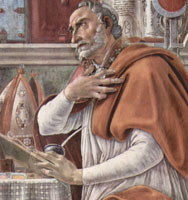
Saint Augustine (354-430 A.D.) served as Bishop of Hippo (modern day Annaba, Algeria). He is the pre-eminent “Doctor of the Church” according to Roman Catholicism, and is considered by many Evangelicals to be one of the theological fathers of the Protestant Reformation due to his teachings on salvation and grace. He is best known for his books “Confessions” and “The City of God.”
Augustine

Augustine received a letter from his friend Possidius who was Bishop of Calama asking him numerous questions. One of those questions was should he (Calma) permit “ornaments of gold and costly dress?” Augustine told him that it shouldn’t be forbidden “except in the case of those who [are] neither [married] nor [intend] to marry.” He said this was because they “are bound to consider only how they may please God.” The rational he provided to allow those who are married to wear decorated dress was that they must “consider how they may in these things please their wives if they be husbands, their husbands if they be wives” (1 Cor 7:32-34.) So Augustine saw that looking good and attractive for your spouse was permitted. He did have one stipulation to this allowance though. He said, “with this limition, that it is not becoming even in married women to uncover their hair, since the apostle commands women to keep their heads covered.” So here we see that even though he permits married women to wear decorated dress, they are not allowed to uncover their heads. The fact that he said it was not becoming “even” in married women likely indicates that he believed single women were to cover their heads too. The fact he addressed a modern situation shows that Augustine believed that head covering was not cultural but was to be practiced in his day in Northern Africa. 1) All quotations from this paragraph are taken from “Letter 245” which can be read online here: http://www.newadvent.org/fathers/1102245.htm Read more

References

1.
 All quotations from this paragraph are taken from “Letter 245” which can be read online here: http://www.newadvent.org/fathers/1102245.htm

Where did the “Long Hair” view come from?

When & Where did the Long Hair view come from?

The view that a “head covering” refers to a woman’s long hair is a very popular belief held by many Christians today. We decided to embark on a search to find out where this view originated and how recent it really is.

A. Philip Brown II (PhD, Bob Jones University) is one of the more prominent and articulate defenders of the “long hair” view. He says:

On the whole, modern interpreters deviated little from identifying the covering Paul requires as a veil or material headdress until the mid-twentieth century. Although the view that the covering Paul required or forbade was itself long hair had been held popularly by various groups throughout the 20th century, Abel Isaakson was the first to offer the scholarly community an extended argument for this position in print. 1) A. Philip Brown II – A Survey of the History of the Interpretation of 1 Corinthians 11:2-16 (Aldersgate Forum, 2011) Page 12 [Read here]

So Dr. Brown identifies the starting point of this view (which he holds himself) as the 20th century. He indicates that Abel Isaakson writing in 1965 was the first to make a scholarly defense of this doctrine. However, he footnotes that in 1947, the Roman Catholic priest Stefan Lösch “made a similar argument…however, it received little attention.” 2) A. Philip Brown II – A Survey of the History of the Interpretation of 1 Corinthians 11:2-16 (Aldersgate Forum, 2011) Page 12, footnote #49 Read more

References

1.
 A. Philip Brown II – A Survey of the History of the Interpretation of 1 Corinthians 11:2-16 (Aldersgate Forum, 2011) Page 12 [Read here]
2.
 A. Philip Brown II – A Survey of the History of the Interpretation of 1 Corinthians 11:2-16 (Aldersgate Forum, 2011) Page 12, footnote #49
Send this to a friend