fbpx

Navigate / search

What is a Head Covering? Is it a Woman’s Long Hair or a Veil?

In 1 Corinthians 11, the Apostle Paul instructs women to cover their heads while praying or prophesying. For 1900 years, the church understood Paul to be speaking of an artificial covering such as a veil or scarf. However, in the 20th century, a view began to gain popularity which argued that Paul wasn’t speaking about veils, but hair lengths. In this video we’ll overview this debate and provide 5 reasons for why we believe a woman is to cover her long hair with an artificial covering when praying or prophesying.

This video is an adaptation of an article we wrote here.

The Understanding Test

The Understanding Test

Have you ever engaged someone in a friendly debate only to hear them say, “That’s not what I really believe” or “That’s not what I mean?” I’ve said that to others and have heard that said back to me. This often happens when we learn about a position from someone who doesn’t hold to it. Though it may be unintentional, when we disagree with a position we will usually not present it in the same way as if we agreed with it.

So how do we know if we truly understand a viewpoint or doctrine? Do we really understand Buddhism and Islam? Calvinism and Arminianism? How about the various views on head covering? How would we know if we really do understand them? Read more

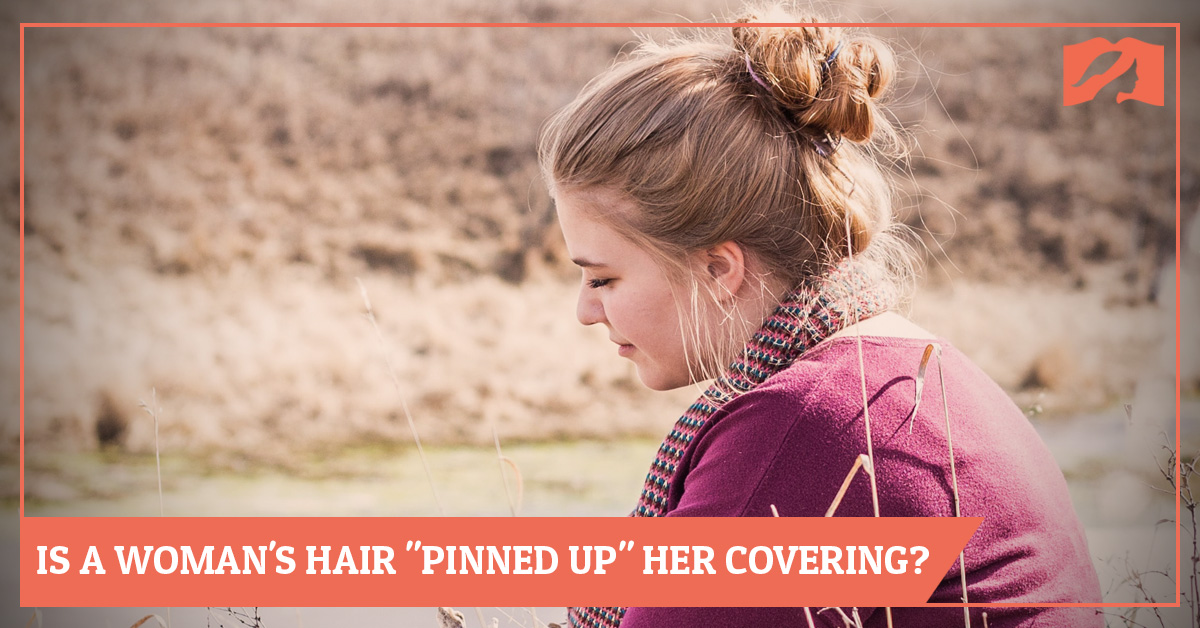
Is a Woman’s Hair “Pinned Up” Her Covering?

Is A Woman's Hair "Pinned up" Her Covering?
The Objection: The Greek word “Akatakalyptos” is incorrectly translated as “uncovered” or “unveiled” in English translations of the Bible. A more accurate rendering would be “unloosed”. Paul is not commanding women to wear a head covering, but is telling them to pin/bundle their hair up instead of letting it hang down their backs.

This view was articulated by James B. Hurley (Professor of Marriage and Family Therapy, RTS Jackson) who said:

…the custom in view was not the wearing of the shawl but rather the wearing of that hair style which marked a woman in proper relation to her husband or father. It was the custom of women to wear their hair pinned up in a “bun” rather than hanging loose. 1) Did Paul Require Veils or the Silence of Women? A Consideration of 1 Cor 11:2-16 and 1 Cor 14:33b-36 (Volume: WTJ 35:2 – Winter 1973)

How is this view supported? Dr. Hurley says the most “fruitful text” to study is how the Septuagint translates Leviticus 13:45. The Septuagint (also known by the abbreviation, LXX) is a Koine Greek 2) The language the New Testament was written in. translation of the Old Testament. It was the Bible used by Greek speakers in the time of Jesus and the Apostles. So let’s first take a look at this passage Dr. Hurley mentioned with a special focus on the Hebrew 3) The language the Old Testament was written in. word behind hair “hanging loose”. Read more

References

1.
 Did Paul Require Veils or the Silence of Women? A Consideration of 1 Cor 11:2-16 and 1 Cor 14:33b-36 (Volume: WTJ 35:2 – Winter 1973)
2.
 The language the New Testament was written in.
3.
 The language the Old Testament was written in.

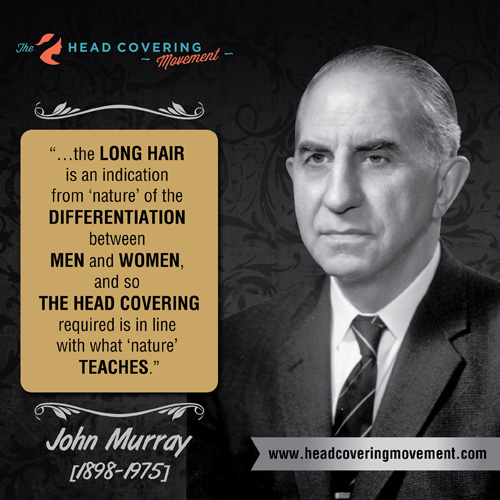
John Murray Quote Image #1

John Murray Head Covering Quote #1

If this quote has piqued your interest, read “Why Head Coverings?: Reason #3 – Nature“.

Thanks to Westminster Archives for providing the picture 🙂

Send this to a friend