Jeremy Gardiner, founder of the Head Covering Movement, recently announced that he’s stepping down as Director. In his leadership transition statement, he introduced us – Jessica Roldan and David Phillips – as the new Co-Directors.Read more
“Covering the Web” is where we shine the spotlight on content about head covering or complementarianism that we did not produce ourselves. Each edition includes articles, videos, photos, as well as e-book deals relevant to our movement’s mission. Links are not endorsements.
MUST READ:8 Tools for a Godly Wife (Founders)
“If we are to be women who build a house, then we need tools. God has given us a great amount of instruction, tools so that we might build well. I want to mention eight.”
Toxic Masculinity (Christian Perspectives)
“The second word associated with “toxic” is masculinity. This is a result of oppressed narratives intensified exponentially by intersectionality. In this system, one’s classification determines what level they are the oppressed or the oppressor. So, if one is a White Christian male, then he is the highest level oppressor.”
Headcovering: Practiced in the Past and Still for Today (Cloverdale First Presbyterian)
“As we all know, the woman’s hair is exceedingly important to her. So, she is to cover her glory in public worship giving all glory to God. She is not doing so for man, but for her Lord. She takes delight in giving the Lord all the glory in her worship.”
The following are a list of limited time e-book deals which are on the topic of biblical manhood and womanhood. If you don’t have a Kindle device, you can install their free reading app on your computer, phone, or tablet. Prices may vary per region.
If you’d like to have your picture featured here, tag #headcoveringmovement in your relevant Instagram posts (make sure your account is public). You can follow us on Instagram @headcovering.
I clearly remember how I felt as someone confronted me during a conversation on the phone. At first, I was a little hot in the face, but by the time our conversation was over, I felt as if I couldn’t breathe. I could barely even say, “Goodbye.” Actually, I didn’t have a chance to, because the other person hung up on me. My hands were trembling uncontrollably. I wanted to cry. Thankfully, that discussion was completely unrelated to head covering. But, it could have been.
The thought of having to explain why we cover to fellow church-goers, family, or friends can make us nervous. In my experience, very few people have approached me about head covering. However, the question still lingers: What if more did? What would I say? Many head covering women have probably had that same feeling. In this article, I’d like to suggest a few ways we can prepare ourselves for those conversations — while honoring God and maintaining our peace.
Realistically, talking about head covering & biblical roles for men and women isn’t much different than talking about any other aspect of the Christian faith. We will always encounter people whose beliefs are not exactly the same as ours, whether non-believers or believers. No matter what the topic of discussion is, we can apply the same principles.
The late Francis A. Schaeffer, a famous evangelical philosopher of the twentieth century, wrote this about communicating with those who have different beliefs than we do:Read more
Throughout church history, we see Christian men taking their hats off during prayer and Christian women putting hats (veils, bonnets, etc) on during prayer. The practice is derived from Paul’s first letting to the Corinthians and is found in the opening text of chapter eleven. However, in the modern church, this practice is kept by the men but not by the women. In this episode, Dale and Veronica Patridge look at this passage to understand what it’s truly instructing.
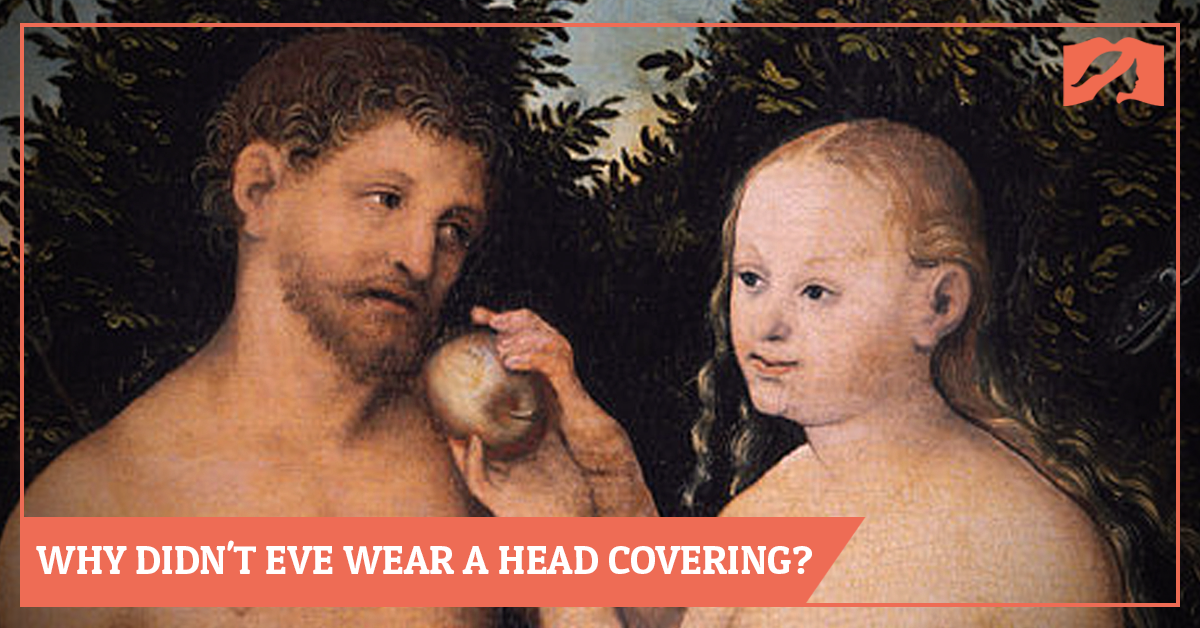
The Objection: You say that Paul appeals to the creation order in 1 Corinthians 11 and I agree that it appears that way. The thing is, if that is the case, where was Eve’s head covering? Genesis 2 says she was naked, and not ashamed. And you can’t turn around and say that it only began after the Fall, because then it wouldn’t be a Creation mandate. How would you respond to such an argument?
In 1 Corinthians 11, the Apostle Paul grounds his argument for head covering in the pre-fall creation order. This is one of the strongest arguments for why veiling is not a cultural practice but rather is something that is to be upheld by all Christians. In making a distinction between the principle (biblical manhood and womanhood) and the symbol (head covering), some hold that only the principle needs modern affirmation. The symbol is seen as a cultural practice that pointed to proper gender roles in the first century, but that has no meaning today. Many complementarian theologians arrive at this conclusion because of a wrong expectation of continuity in practice. Meaning if the veil was truly grounded in the creation order, then not only would Eve have worn it before the fall, but also every godly woman throughout biblical history.
Head covering is not a practice that was required under the Old Covenant (though many women did cover throughout this time). It is only a requirement for those under the New Covenant (like us). So let’s first state up front that I agree that head covering was not supposed to be practiced in continuity from Eve onward. But that does not deal a death blow to the creation order argument. My position is that God has taken something common (a covering) and has infused it with creation order meaning. So he has set up a brand new symbol which he designed and gave meaning to, and then had His apostles deliver it to the churches for them to practice. This is not an anomaly as God has always been about creating symbols to visually teach different truths. Many of these symbols (like head covering) were only to be practiced under one covenant. For example, the sacrifices and the feasts (Col 2:16-17) were only to be practiced under the Old Covenant whereas Baptism and the Lord’s Supper are only for the new covenant. Read more
It’s the passage that your pastor recites every time he introduces the Lord’s Supper (a.k.a, Communion or Eucharist). “This bread is My body, which is broken for you… This cup is the new covenant in My blood… Do this, as often as you drink it, in remembrance of Me.” These are the words of Jesus, quoted by the Apostle Paul in First Corinthians 11.
To institute the Lord’s Supper, Christ took an ancient practice (the Passover celebration) and gave it a powerful new meaning. Eating the Passover meal had already been a standard tradition in Israelite culture for hundreds of years. But Jesus’ divine adaptation of it became an honored practice of the Christian Church. Two thousand years later, Communion is still regularly celebrated around the globe.
What did it take to transform this Jewish tradition into a new universal Christian practice? We see the combination of three factors: (1) a description of the new symbolic practice, (2) an explanation of the uniquely-Christianreasons for the new symbolic practice, and (3) an unqualified command to perform the new symbolic practice. Regarding Communion, each of these components was provided by Jesus, taught by the Apostles, and maintained in the pages of Scripture for Christians throughout history.
But here’s the interesting thing: the practice of (and meaning behind) the Lord’s Supper has no unique relationship to modern Western culture. Yet, separated from its initiation by 2000 years, believers today feel quite comfortable with continuing this ancient practice. Because of the three key components listed above, Christians affirm that Communion was intended by God to extend well beyond the local First Century churches.
However, it would be easy for modern churches to find reasons to give up this tradition. For example, Christians today could simply say…
“The Lord’s Supper is not understood by the average person on the street nowadays. If we practiced it in our church, visitors would be confused.They may even consider leaving if we start talking about eating Jesus’ body and drinking His blood.”
“Jesus and His disciples were Jewish, and they were employing a Jewish practice. But we’re not a Jewish church, and we’re not trying to import Jewish culture into our church.”
“People today want substance, not rituals. The Lord’s Supper was only a symbolic tradition — the reality is in Christ Himself. Just experiencing Jesus personally is more than enough for us.”
In spite of responses like these, the Lord’s Supper is a solid component of Christianity — both historically and biblically. Most believers would agree that if a congregation decided that Communion is no longer relevant, they could not base their discontinuation of it on the teaching of Scripture. Read more