[Series introduction:This post is part of a series that examines what certain leaders in church history believed about head covering. Their arguments, choice of language and conclusions should not be misconstrued as an endorsement from us. The purpose of this series is to faithfully show what they believed about covering rather than only selectively quoting the parts we agree with.]
Ambrosiaster (4th century) is the name given to the anonymous author of the earliest complete Latin commentary on the thirteen epistles of Paul. The commentaries were thought to have been written by Ambrose throughout the Middle Ages, but their authorship was challenged by Erasmus, whose arguments have proved decisive. Writing during the pontificate of Damasus (366-384), he is a witness to Nicene orthodoxy and often offers comments that reflect his knowledge of how the church had changed from the time of the apostles to his own day. His commentaries offer us insight into the thinking of a pre-Reformation church leader.
Though we don’t know the identity of Ambrosiaster, his commentary gives us access into the mind and beliefs of a 4th century Christian theologian. We’re able to see that head covering had adherents and defenders from the early church and we can see how someone from that era understood Paul’s reasoning in the text. Since Ambrosiaster provides a line-by-line commentary of 1 Corinthians 11, we have a more complete picture of how he understood this doctrine.
First we see that Ambrosiaster was a complementarian. He understood that the structure of authority given in 1 Cor 11:3 did not indicate value or worth, but function. He said “Man is greater than she is by cause and order, not by substance”. The woman should not “be upset because of her state of subjection” and the man should not think “that he has some exalted position”. Read more
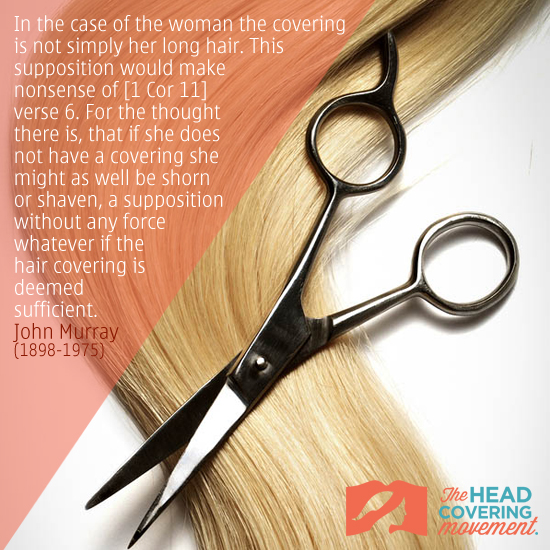
John Murray (1898-1975), a native of Scotland, studied at Princeton Theological Seminary under J. Gresham Machen and Geerhardus Vos. Murray left Princeton to help found Westminster Theological Seminary, where he taught Systematic Theology from 1930 to 1966. Murray was also an early trustee of the Banner of Truth.
Mr. V. Connors,
Presbytery Clerk,
Evangelical Presbyterian Church,
Australia
Dear Mr. Connors,
I am in receipt of your letter of the 8th. I very deeply appreciate your request even though I may not be able to provide any definitive advice on the questions asked. Allow me to give my judgement on the second question first.
If the Presbytery becomes convinced that a head covering for women belongs to the decorum governing the conduct of women in the worship of God, then I think Presbytery should declare accordingly. I would not suppose it necessary expressly to legislate. I think it would be enough to make a resolution for the instruction and guidance of ministers, sessions, and people. A higher judicatory has both right and duty to offer to those under its jurisdiction, guidance respecting divine obligation. This has been recognised in Reformed Churches throughout the world.
Your main question turns, of course, on the interpretation of I Corinthians 11:2-16. Permit me to offer some of my reflections in order. Read more
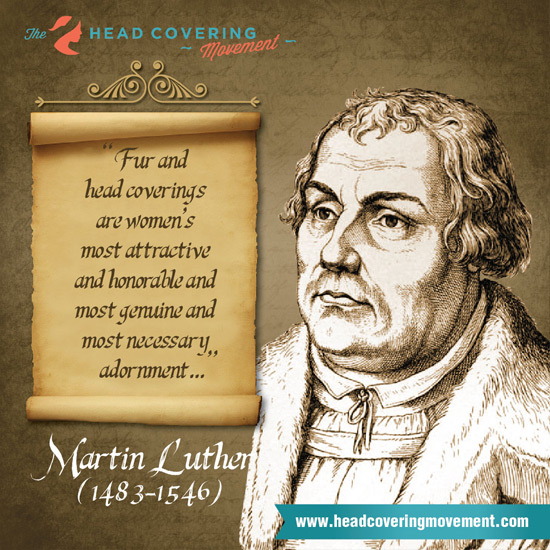
Source: Weimar edition of “Luther’s Works” – WA TR IV, no 4090, page 129
Quoted from Susan C. Karant-Nunn & Merry E. Wiesner – Luther on Women: A Sourcebook (Cambridge University Press, 2003) page 31