fbpx

Navigate / search

Covering the Web: Edition #10

Covering The Web

“Covering the Web” is where we shine the spotlight on content about head covering or complementarianism that we did not produce ourselves. Each edition includes articles, videos, photos, as well as e-book deals relevant to our movement’s mission. Links are not endorsements.

  • MUST READ:Reclaiming the Household
    “The household is a social form, a domestic community; the family, too, is a social unit, but it shades into the purely biological fact of consanguinity. One can be part of a family without being part of its household. This distinction is important if we are to understand and renew family life.”
  • How Biblical is your Womanhood? Two Easy Tests
    “Both of these litmus tests are lacking, though. We can’t define our sense of worth by our happiness, or we’ll never want to do anything hard. We can’t define our sense of well-being by our sense of shame, or we’ll never get past self-flagellation long enough to delight in the Lord.”
  • Do you wear one Mrs. Sproul?
    ” I am going before thousands upon thousands of angels in joyful assembly, the church of the first born, whose names are written in heaven. I am coming to God, the Judge of all. Scripture instructs me to do so. “


Best Of Youtube

Best of Instagram

If you’d like to have your picture featured here, tag #headcoveringmovement in your relevant Instagram posts (make sure your account is public). You can follow us on Instagram @headcovering.


View this post on Instagram


Re-Posted • @kathrineeeredeemed

A post shared by Head Covering Movement (@headcovering) on

Found an interesting link about head covering or biblical manhood/womanhood? Tell us about it here.

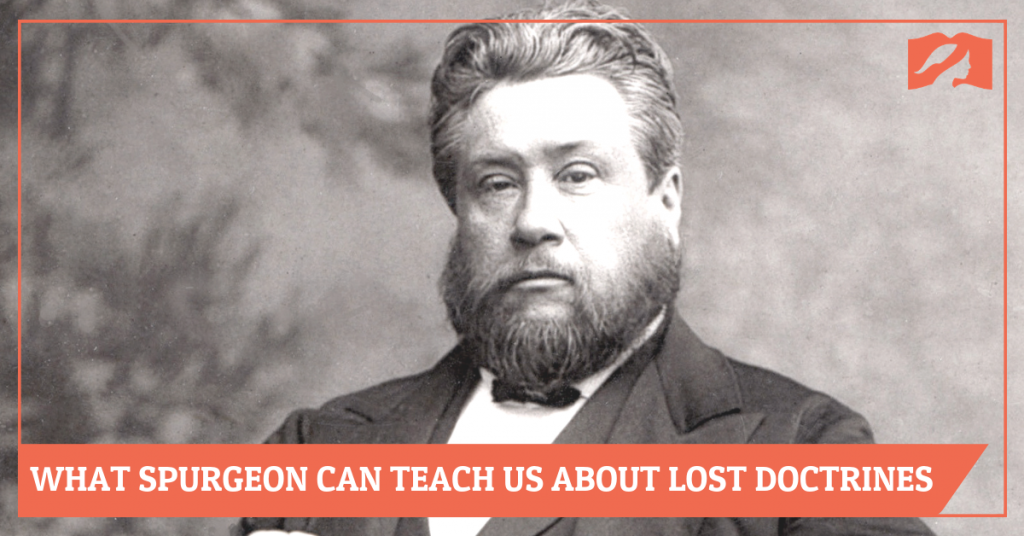
What Charles Spurgeon Can Teach Us About Lost Doctrines

What Charles Spurgeon Can Teach Us About Lost Doctrines

Christian head covering is not a new belief. It is a practice with a long history that has been largely forgotten in the 21st century. Similar to the Reformers of years past, the goal of each generation of reformers is not to invent new doctrines, but to re-discover the old ones.
The 19th-century preacher Charles Spurgeon helped do this for the Doctrines of Grace, also known as Reformed theology. Although this system of Protestant beliefs was the dominant view during the Puritan age in England, during Spurgeon’s time it was a minority (and largely-forgotten) position. Steven Lawson explains the situation:

When Charles Spurgeon burst onto the scene in the mid-19th century, he appeared heralding the doctrines of sovereign grace. At that time, Calvinism was no longer the dominant theology in England, as it had been in Puritan times. Instead, the doctrines of grace were becoming obscured from public view, cast aside as dusty and archaic relics of primitive 16th-century Europe. Victorian England had come of age, it was supposed, and its philosophers championed the autonomy of man, not the sovereignty of God. The teaching of the Reformation had all but faded from the evangelical scene. But rather than becoming infatuated with the current theological fads, Spurgeon chose to stay true to the old paths, those laid out in Scripture long ago, including the teachings of sovereign grace. He said: “It is no novelty, then, that I am preaching; no new doctrine. I love to proclaim these strong old doctrines, that are called by nickname Calvinism, but which are surely and verily the revealed truth of God as it is in Christ Jesus.” (Lawson 37-38) 1) Lawson, Steven J. The Gospel Focus of Charles Spurgeon. Reformation Trust Publishing, 2012.

Spurgeon is affectionately honored as the “Prince of Preachers,” not because he was a clever man who devised new theological fads, but because of his bold proclamation of doctrinal truths that had been forgotten in his generation. It is easy for the people of God to forget. We take the Lord’s supper regularly “in remembrance of [Jesus]” (1 Cor. 11:24 ESV) because we are prone to forget. Every generation must take up the task of teaching Christian beliefs afresh, so that they will not be lost to the pages of history.

In Spurgeon’s day, the practice of head covering was not an abandoned doctrine but something that was commonplace. Referring to his own church, he wrote:

The reason why our sisters appear in the House of God with their heads covered is ‘because of the angels.’ The apostle says that a woman is to have a covering upon her head because of the angels, since the angels are present in the assembly and they mark every act of indecorum, and therefore everything is to be conducted with decency and order in the presence of the angelic spirits. (Spurgeon 98) 2) Spurgeon, Charles Haddon. Spurgeon’s Sermons on Angels. Kregel Academic, 1996.

Spurgeon understood that the reason for head covering was not related to first-century culture, but rather to the angelic spirits (who transcend time, place, and culture).

Charles Spurgeon had a profound impact in both Christian theology and practice. Partly due to his influence, Reformed theology is more widely accepted nowadays.  While the same cannot be said for the practice of head covering (yet!), the same principle applies. We must follow Spurgeon’s example by “[staying] true to the old paths, those laid out in Scripture long ago” (Lawson 38). 3) Lawson, Steven J. The Gospel Focus of Charles Spurgeon. Reformation Trust Publishing, 2012.

References

1.
 Lawson, Steven J. The Gospel Focus of Charles Spurgeon. Reformation Trust Publishing, 2012.
2.
 Spurgeon, Charles Haddon. Spurgeon’s Sermons on Angels. Kregel Academic, 1996.
3.
 Lawson, Steven J. The Gospel Focus of Charles Spurgeon. Reformation Trust Publishing, 2012.

How The Church Instructs Angels (Video + Audio Sermon)

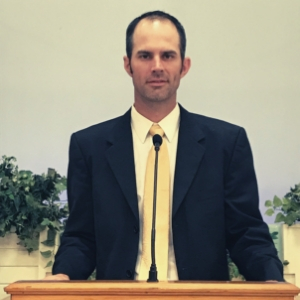
Head Covering Sermon

Preacher: Joel Walters | Sermon Length: 1hr 3min | Preached: Sept 20, 2015

At a very young age, Joel responded to the Gospel message and became a disciple of Jesus Christ. As a young man, he felt God’s call to ministry and after graduating from High School he began working at his church. He served in whatever way possible and eventually became the worship leader and worked with the youth ministry. In 2008 he was led by the Lord to plant The Bible Fellowship a non-denominational church in Wimauma, FL. He has been pastoring there ever since. Joel and his wife Denaye have 3 children and are blessed and privileged to know and serve the Lord Jesus Christ.

>>> In addition to streaming this sermon above, you can also download it.

Dr. Martyn Lloyd-Jones on Angels and Head Covering

Dr. Martyn Lloyd-Jones (1899-1981), minister of Westminster Chapel in London for 30 years, was one of the foremost preachers of his day. His many books have brought profound spiritual encouragement to millions around the world.

 Transcript: “In the first epistle to the Corinthians in the eleventh chapter and the 10th verse, Paul uses these words, “For this cause ought the woman to have power on her head because of the angels.” You will remember that he’s considering the question of women praying without their heads being covered. Apparently some of the women in the church of Corinth were taking part in prayer with their heads uncovered. And the Apostle tells them that that’s quite wrong. It’s not only wrong because a woman should have her head covered to show that she is under the authority of the man, but in addition to that he says to that she should be covered because of the presence of the angels. In other words, the Scripture teaches that when you and I are met as we are at this moment and when we’re met together in prayer that the angels of God are present and are looking upon us. And the woman is to be covered when she takes part in public prayer because of the presence of the angels. It’s a tremendous and a remarkable thing. Let us bear it in mind.”

Full Sermon: This clip is from his sermon “Good Angels” which can be downloaded here for free.

Why ‘Because of the Angels’ does not refer to the ‘Sons of God’ in Genesis

Why 'because of the angels' does not refer to the 'sons of God' in Genesis

In 1 Corinthians 11:10, Paul says we’re to practice head covering “because of the angels.” This is rightly called an obscure verse because Paul does not explain what he means by that phrase. There are many theories, which we’ve already articulated, but today we’d like to talk about a popular view that we think is highly improbable. This is the belief that the angels are the “sons of God” mentioned in Genesis 6. Here’s what that portion of Scripture says:

Now it came about, when men began to multiply on the face of the land, and daughters were born to them, that the sons of God saw that the daughters of men were beautiful; and they took wives for themselves, whomever they chose. Then the LORD said, “My Spirit shall not strive with man forever, because he also is flesh; nevertheless his days shall be one hundred and twenty years.” The Nephilim were on the earth in those days, and also afterward, when the sons of God came in to the daughters of men, and they bore children to them. Those were the mighty men who were of old, men of renown. (Gen 6:1-4 NASB)

The identity of the “sons of God” is debated 1) For an overview of the various views please visit this page: https://answersingenesis.org/bible-characters/who-were-the-nephilim/ , but one of the more popular views is that they refer to fallen angels. In this theory, demons lust after human women, which leads them to take wives for themselves and have children with them. Thus it is asserted that when Paul tells women to cover their heads “because of the angels” (1 Cor 11:10), he means so that the fallen angels will not lust after them or sexually assault them. Read more

References

1.
 For an overview of the various views please visit this page: https://answersingenesis.org/bible-characters/who-were-the-nephilim/
Send this to a friend