
Is a Woman’s Hair “Pinned Up” Her Covering?
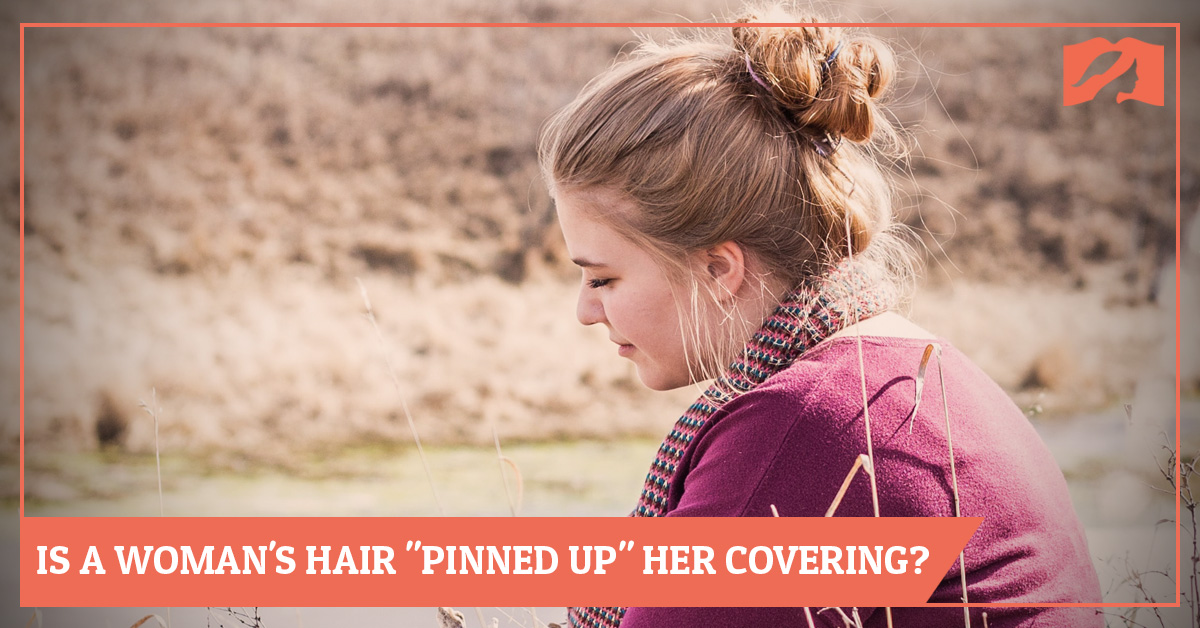
This view was articulated by James B. Hurley (Professor of Marriage and Family Therapy, RTS Jackson) who said:
…the custom in view was not the wearing of the shawl but rather the wearing of that hair style which marked a woman in proper relation to her husband or father. It was the custom of women to wear their hair pinned up in a “bun” rather than hanging loose. 1) Did Paul Require Veils or the Silence of Women? A Consideration of 1 Cor 11:2-16 and 1 Cor 14:33b-36 (Volume: WTJ 35:2 – Winter 1973)
How is this view supported? Dr. Hurley says the most “fruitful text” to study is how the Septuagint translates Leviticus 13:45. The Septuagint (also known by the abbreviation, LXX) is a Koine Greek 2) The language the New Testament was written in. translation of the Old Testament. It was the Bible used by Greek speakers in the time of Jesus and the Apostles. So let’s first take a look at this passage Dr. Hurley mentioned with a special focus on the Hebrew 3) The language the Old Testament was written in. word behind hair “hanging loose”. Read more
References
- Share
- Like
- Tweet
- Pin It
- Digg
- Delicious
- Tumblr
- VKontakte
- Flattr
- Buffer
- Love This
- Odnoklassniki
- Meneame
- Blogger
- Amazon
- Yahoo Mail
- Gmail
- AOL
- Newsvine
- HackerNews
- Evernote
- MySpace
- Mail.ru
- Viadeo
- Line
- Comments
- Yummly
- SMS
- Viber
- Telegram
- Subscribe
- Skype
- Facebook Messenger
- Kakao
- LiveJournal
- Yammer
- Edgar
- Fintel
- Mix
- Instapaper
- Copy Link